

How to Get into Your Tech Startup Into the News
Your complete guide to startup PR, media coverage and founder visibility across Canadian and U.S. markets
Most startup media pitches fail for one simple reason: they confuse company activity with news.
A launch is not automatically news. A funding round is not automatically news. A new product, new hire or expansion may matter inside the company, but that does not mean it matters to a journalist, editor or producer.
Getting your tech, health or AI startup featured in Canadian and U.S. media is not about sending a press release and hoping someone cares. It is about understanding what journalists actually need, what makes your company relevant beyond your own announcement, and how to position your story for the market you are trying to reach.
A pitch that works for Canadian media may not be the same pitch that works for U.S. media. Canadian reporters may care about local relevance, national economic impact, regional growth, Canadian customers, funding, jobs or market expansion. U.S. media may care more about scale, category disruption, investor interest, competitive differentiation, industry adoption or the size of the opportunity.
The story has to travel, but the angle has to be tailored.
Canadian and U.S. media are competitive, and newsrooms are leaner than they used to be. In Canada, the Local News Research Project reported that 603 local news outlets closed in 388 communities between 2008 and October 1, 2025. That means fewer reporters, fewer assignment editors and less space for stories that are not clearly relevant.
At the same time, journalists are flooded with irrelevant pitches. Cision’s 2025 State of the Media findings show that 86 percent of journalists will immediately reject a pitch that is not aligned with their beat or audience. The same report found that 72 percent of journalists still cite press releases as one of the most useful resources PR teams can provide, when they are relevant and well built.
That is why your startup does not just need “PR.” It needs a real story, a clear point of view and proof that the company matters beyond its own announcement.
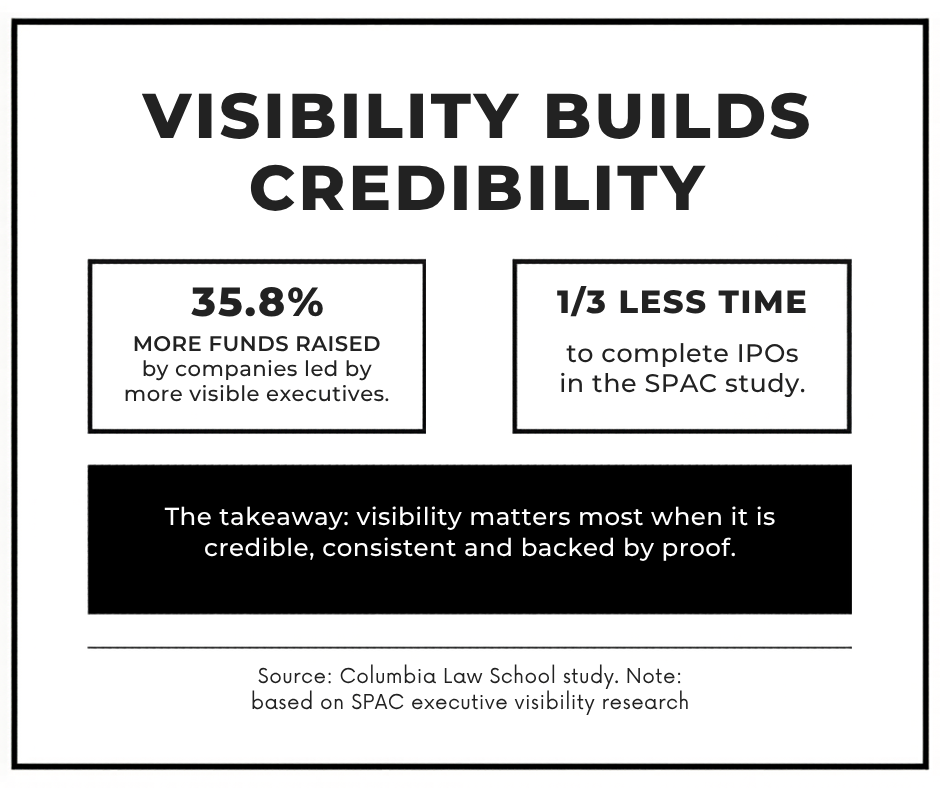
Not sure on how to proceed? The right PR and communications partner will ensure your efforts are worth it, with visibility proven to translate into increased funding, as found in a study conducted by Columbia Law School.
Start with the story, not the startup
Canadian and U.S. media outlets are not all looking for the same thing.
Business media may care about funding, growth, leadership, economic impact, market disruption or trends affecting companies, consumers or investors.
B2B and trade media may care about industry-specific innovation, operational impact, technology adoption, new models, partnerships, regulatory shifts or customer use cases.
Local media may care about job creation, founder stories, community impact, regional growth or a company doing something notable in a specific market.
National media may care about broader economic, cultural, political, technological or consumer relevance.
U.S. media may also look for bigger market context. Is this company part of a fast-growing category? Is it solving a problem at scale? Is it competing with established players? Is it backed by credible investors? Does the founder have a strong point of view on where the industry is going?
Before pitching, look at what the outlet actually publishes. Read the sections. Look at the reporters. Study the headlines. Notice which startups get covered and which ones do not. A Canadian business outlet, a U.S. tech publication, a local newspaper, a trade publication, a podcast and an industry newsletter will not respond to the same pitch in the same way.
The media landscape is also fragmented. The Reuters Institute’s 2025 Digital News Report found that overall trust in news in Canada sits at 39 percent, while only 14 percent of Canadians pay for online news. While earned media builds authority and can be leveraged across your investor decks and channels, in addition to amplifying visibility with high DA coverage, for startups, that means earned media has to work harder. The story needs to be clear enough for journalists, useful enough for readers and credible enough to stand up in a low-trust information environment.
If your pitch does not look, feel or sound like something that outlet or reporter would realistically run, it is probably not ready, or it is not the right fit.
Build a clear media angle
A media angle is not the same as a company update.
A company update says:
“We launched a new platform.”
A media angle says:
“As Canadian businesses face rising costs and labour shortages, one Toronto startup is helping companies automate a process that has traditionally required hours of manual work.”
The second version gives the journalist a reason to care.
Strong startup media angles often fall into a few categories.
Market shift: Your company reflects a bigger change in the economy, technology, consumer behaviour or industry.
Founder insight: Your founder has a strong point of view on an issue journalists are already covering.
Market relevance: Your news release or pitch is tailored to the market or region. Explain why your company is solving a problem that matters in Canada, to Canadian businesses, consumers or communities. Do the same when pitching U.S. media.
Data or trend: You have credible data, customer insight or market evidence that reveals something new.
Human impact: Your technology or service affects real people, not just abstract business outcomes.
Timely hook: Your story connects to something already in the news.
The strongest pitches usually combine several of these elements. Media coverage is rarely earned by one announcement alone. It is earned when timing, relevance, proof and credibility line up.
Have proof before you pitch
Newsflash: the media do not care about you.
Journalists do not exist to promote your company. They need evidence and reasons to share useful information with their audiences.
Before pitching Canadian or U.S. media, make sure you can support your claims with proof.
That might include:
Customer results
Revenue or growth metrics
Funding information
Market data
Case studies
Founder expertise
Third-party research
Partnerships
Awards or industry validation
User adoption
Canadian or U.S. market relevance
The more specific you are, the stronger your pitch becomes.
Avoid vague claims like “revolutionary,” “game-changing,” “first-of-its-kind” or “disruptive” unless you can prove them. With every claim you make, back it up with a clear proof point.
A stronger claim sounds like:
“We are helping independent grocers reduce delivery waste by 20 percent.”
Or:
“Our platform is now used by 300 Canadian clinics.”
Or:
“We have grown 180 percent year-over-year and are expanding into Western Canada.”
Media coverage is built on credibility, not adjectives.
Do not pitch everyone the same thing
A common startup PR mistake is blasting the same pitch to dozens or hundreds of journalists.
That rarely works.
According to Cision’s 2025 State of the Media findings, relevance is one of the biggest deal breakers for journalists, with 86 percent saying they will reject pitches that do not match their beat or audience. In other words, media targeting is not administrative work. It is strategy.
A reporter who covers venture capital needs a different pitch than a reporter who covers food, health care, technology, small business or the future of work.
The core story may stay the same, but the angle should change depending on the outlet, country and audience.
For example, one startup story could be positioned several ways:
For Canadian business media: growth, funding, jobs, Canadian market opportunity
For U.S. tech media: category growth, scale, competitive differentiation, investor relevance
For trade media: industry problem, technical solution, customer use case
For local media: founder story, regional economic impact, job creation
For podcasts: founder journey, lessons learned, point of view
For Substack or newsletter writers: insight, analysis, contrarian thinking, category context
Better targeting usually beats bigger lists.
Make the founder media-ready
For many startups, the founder is the story.
That means your founder needs more than enthusiasm. They need a clear point of view. A differentiated voice is required to earn press interest and can also help your company surface in search and AI-generated answers.
Journalists are looking for people who can explain what is changing, why it matters and what most people are missing. They want context and perspective, not rote information they can find with a Google search.
A founder should be able to answer:
What problem are you solving?
Why now?
Why are you the right company to solve it?
What is changing in the market?
What do people misunderstand about this issue?
What evidence do you have?
Why should anyone outside your company care?
Why does this matter in Canada, the U.S. or both?
Media training is especially important for technical founders. Deep subject matter expertise is valuable, but only if it can be translated into clear, useful and quotable language.
Use thought leadership before you need coverage
Not every startup is ready for a big media feature. That is fine.
Sometimes the smartest path is to build authority first.
That can include LinkedIn thought leadership, founder commentary, contributed articles, podcast appearances, speaking opportunities, industry association content, newsletters and owned insights.
This matters because media coverage rarely happens in isolation.
When a journalist, producer, editor, podcast host or newsletter writer looks you up, they should be able to quickly understand who you are, what you know and why your perspective is credible.
Your digital footprint should support the pitch.
If your website is unclear, your founder has no visible point of view, and your company claims are unsupported, media outreach becomes harder.
Visibility compounds. Start before you need it.
Understand what a press release can and cannot do
A press release can be useful, but it is not a magic ticket to coverage.
A good press release helps clarify the announcement, organize the facts and create a source document for media, partners, investors and search.
But a press release alone does not make something newsworthy.
The press release is not dead, but it needs to do a specific job. Cision’s 2025 State of the Media Report found that 72 percent of journalists still cite press releases as one of the most useful resources PR teams can offer. The issue is not the format. The issue is whether the release contains a real story, credible proof, useful context and a clear reason to care now.
For startups, a release may be useful when announcing:
Funding
Major partnerships
Expansion
Acquisitions
Research or data
Significant customer momentum
Product launches with real market relevance
Executive appointments tied to growth
Canadian expansion
U.S. market entry
Targeted pitches to reporters and writers across traditional and modern media, including Substack and industry newsletters, are also essential. In some cases, founder commentary or a thought leadership campaign may be more effective than a press release.
Build relationships before you pitch
The worst time to introduce yourself to a journalist is when you desperately need coverage.
Founders should pay attention to the reporters who cover their industry. Follow their channels on LinkedIn, X, Substack and newsletters. Read and watch their work. Share relevant articles. Understand their beat. Offer useful commentary when appropriate.
This does not mean pestering reporters or sending generic “great article” messages.
It means becoming a credible, useful source over time.
When your startup does have news, you are no longer starting from zero.
Be realistic about what media coverage can do
Media coverage can build awareness, credibility, investor interest, customer trust, search visibility and authority.
Credible media coverage can also strengthen how your company shows up in search and AI-generated answers. Muck Rack’s May 2026 Generative Pulse analysis looked at more than 25 million links from ChatGPT, Claude and Gemini responses and found that earned media accounts for 84 percent of all AI citations, while paid and advertorial content accounts for just 0.3 percent. Journalism alone made up 27 percent of cited sources.
This is one reason earned media still matters. It is not just visibility. It is third-party credibility that can be found, cited and reused across the information ecosystem.
But media coverage is not a replacement for sales, marketing, product-market fit or a clear business strategy.
A single article will not fix weak positioning. It will not create demand if the market does not understand the problem. It will not make an unclear company suddenly compelling.
PR works best when the startup already has a sharp message, credible proof and a clear audience.
A seasoned communications and PR partner can also help define your positioning, sharpen your story and build a visibility plan across Canadian and U.S. markets.
That is when media coverage can accelerate trust.
For startups without an in-house communications team, a fractional PR and communications consultant can help clarify the story, build the pitch strategy and manage media outreach.
So, how do you get your startup featured in Canadian and U.S. media?
You need to do the work before the pitch.
Clarify your story.
Connect it to a larger trend.
Build proof.
Understand the Canadian and U.S. media landscape.
Target the right journalists.
Prepare your founder.
Create a strong point of view.
Tailor the angle by market.
Pitch with relevance, not self-promotion.
Canadian and U.S. media will cover startups when there is a real story to tell.
The job is not to convince journalists that your company is important because you say it is.
The job is to show them why it matters now, who it matters to and why the story deserves attention in the market you are trying to reach.
Need help getting your startup media-ready?
Verified Communications helps startups, founders and executive teams clarify their message, build authority and earn credible visibility across Canadian and U.S. media, content and thought leadership channels.
If you are preparing for a launch, funding announcement, expansion, U.S. market entry or founder visibility push, start with the story. That is where good PR begins.
We have helped startups and growth companies including Juno, truLOCAL and Chefs Plate strengthen their market visibility, support GTM strategies and build differentiated positioning across health, tech and consumer sectors since 2016.
Call us today: 416-558-4507.